
There has been a flurry of reports suggesting that at the Bank of Japan’s Monetary Policy Meeting on December 18–19, the BOJ is likely to raise the policy interest rate from 0.5% to 0.75. It is also said that the government is prepared to accept this rate hike.
In response, there is growing speculation that the ripple effects of higher interest rates will eventually reach home mortgages and corporate lending. In financial and housing-related media, articles are increasingly taking the tone that “domestic interest rates are expected to rise further” and that “upward pressure on mortgage rates is likely going forward.”
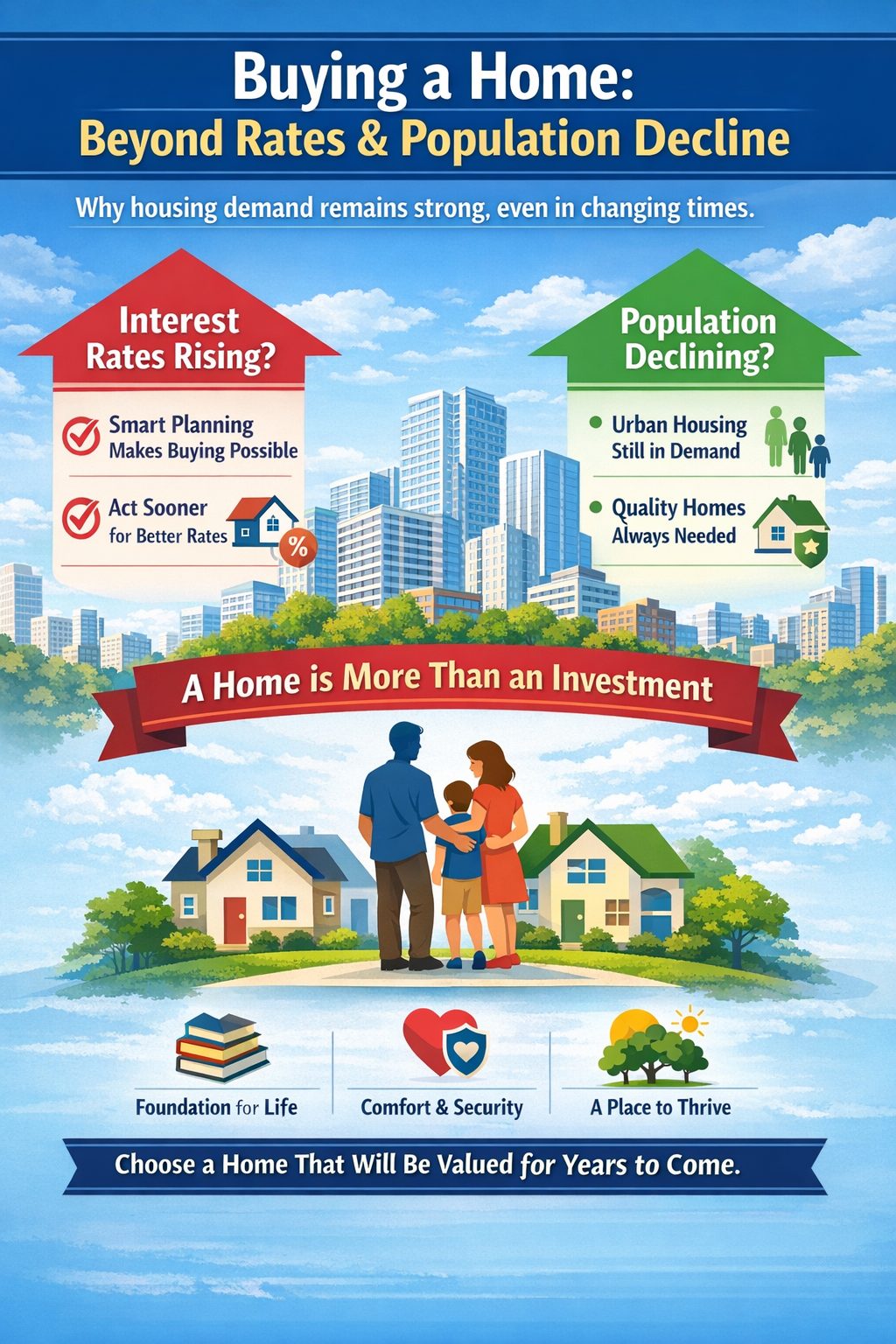
At the same time, as interest rates trend upward, the declining birthrate shows no sign of stopping. For those considering buying a condominium, the atmosphere may feel heavy. But it is precisely at times like this that we should think simply. There are three key points:
(1) Should you buy before interest rates rise?
(2) Will rising interest rates make it impossible to buy?
(3) Will demand for condominiums disappear?
(1) Should you buy before interest rates rise?
First is the idea that “you should buy before interest rates go up.” Many people likely think this way. If you take out a loan at a fixed interest rate, it also provides a strong sense of security. Unlike rent, your payments won’t increase due to inflation. If there is a condominium that meets your requirements, purchasing it before interest rates rise is a sensible strategy.
On the other hand, it’s important to be cautious about stretching yourself too far just because you feel that “you’d be losing out if you don’t borrow.” While it’s true that the amount you repay will change, there’s no need to rush into a purchase before rates rise if it means overextending yourself or making compromises you’re not comfortable with.
(2) Will rising interest rates make it impossible to buy?
Even if interest rates rise, that alone is not a reason to give up on buying. With some ingenuity, purchasing is still possible.
- Structuring the loan — Using a mix of fixed and variable interest rates, extending the loan term, or creating a financial plan that anticipates early repayment.
- Choosing the right property — Targeting units with smaller floor areas, or prioritizing everyday convenience while accepting a slightly longer walk from the station.
- Making use of programs — Using subsidies that are available even for newly built condominiums to reduce the effective financial burden.
That said, one thing to be careful about is not judging solely by the monthly repayment amount. Whether interest rates are high or low, it’s important to consider total housing costs, including management fees, repair reserve funds, parking fees, and property taxes.
(3) Will rising interest rates and a declining population eliminate demand for condominiums?
Even as the population declines, the need for housing remains. Homes are essential for commuting to work or school, caregiving, and raising children—they form the foundation of everyday life. Demand for housing does not simply disappear because of interest rate changes.
In addition, although there is often talk of an oversupply of vacant homes and existing condominiums, many of these properties fall short in terms of livability, such as inadequate earthquake resistance or poor insulation. Even if the population shrinks and vacancies increase, demand for relatively new and newly built condominiums will persist. Regardless of demographic decline, there will continue to be demand for housing that meets modern standards for seismic safety, insulation, and energy efficiency.
Summary
There is a clear rationale for buying while interest rates remain low. Even if rates rise, however, homeownership is still achievable with thoughtful planning. Despite a declining birthrate and overall population, demand for housing—particularly in urban areas—will not disappear.
Although real estate is often seen as an investment, at its core it is прежде all a place to live: a foundation for daily life and the setting in which people build their lives. Recognizing this, the goal should be to choose a home that will continue to be sought after and valued over time.
For additional information or any questions please contact us here
Email: info@remax-apex.com